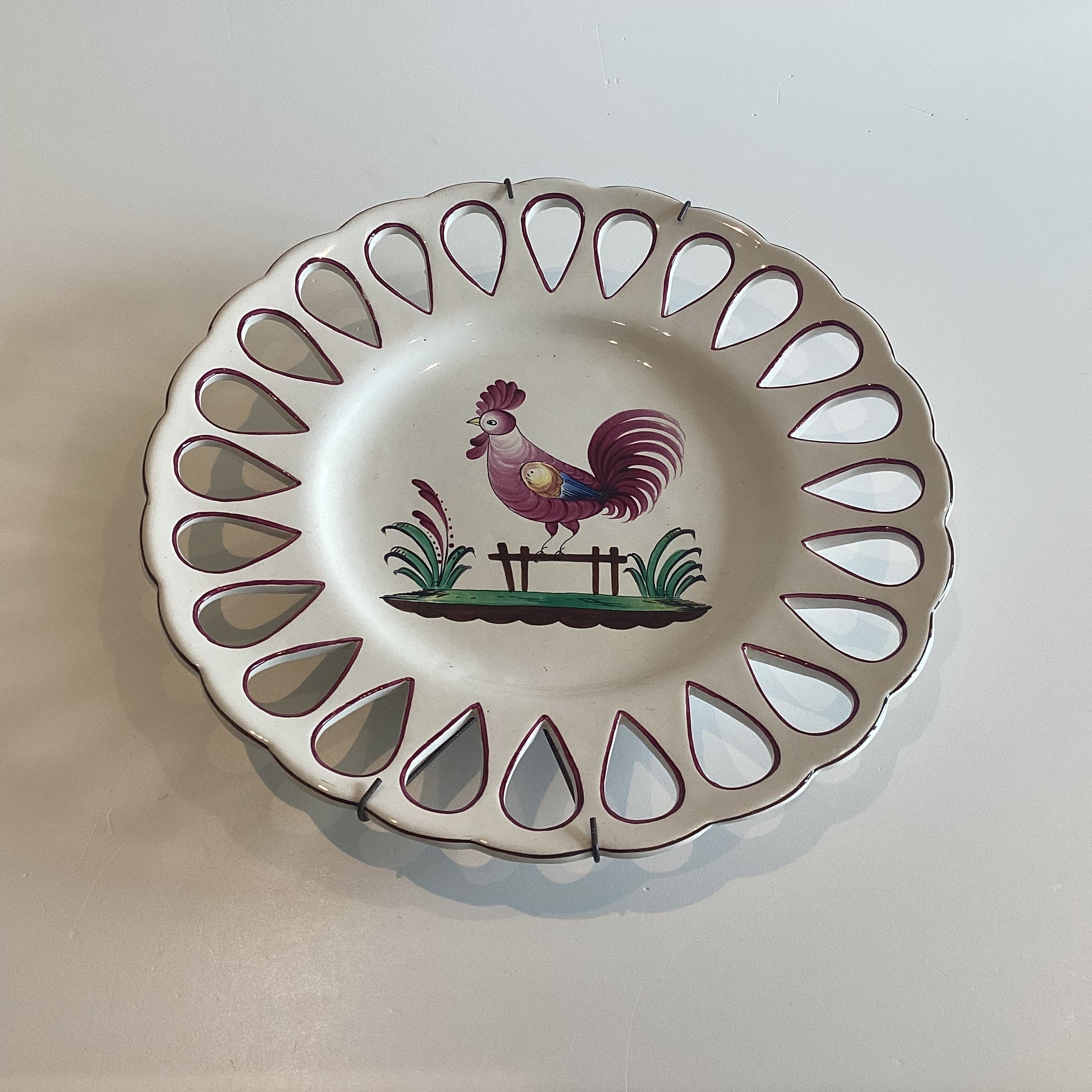
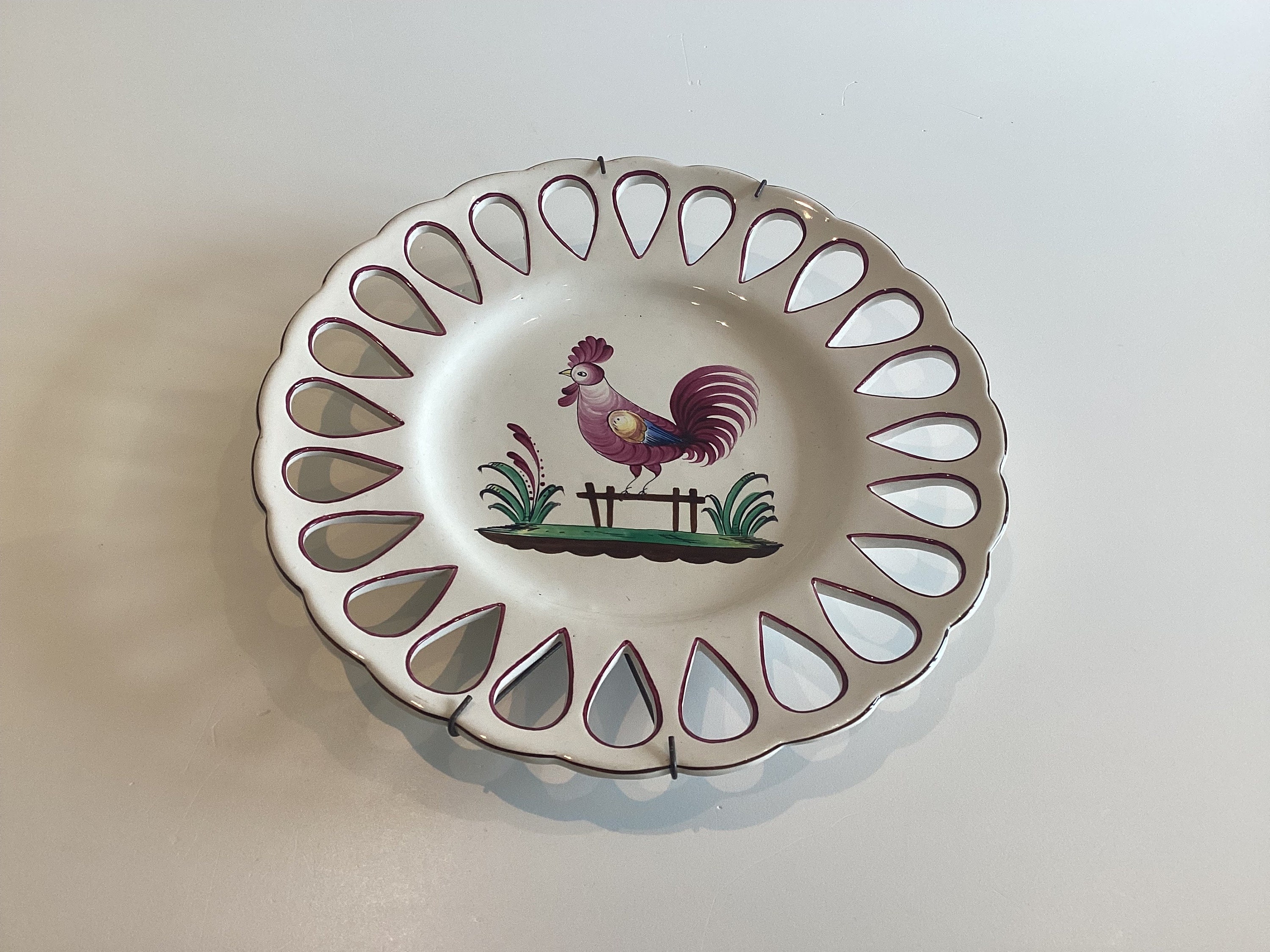
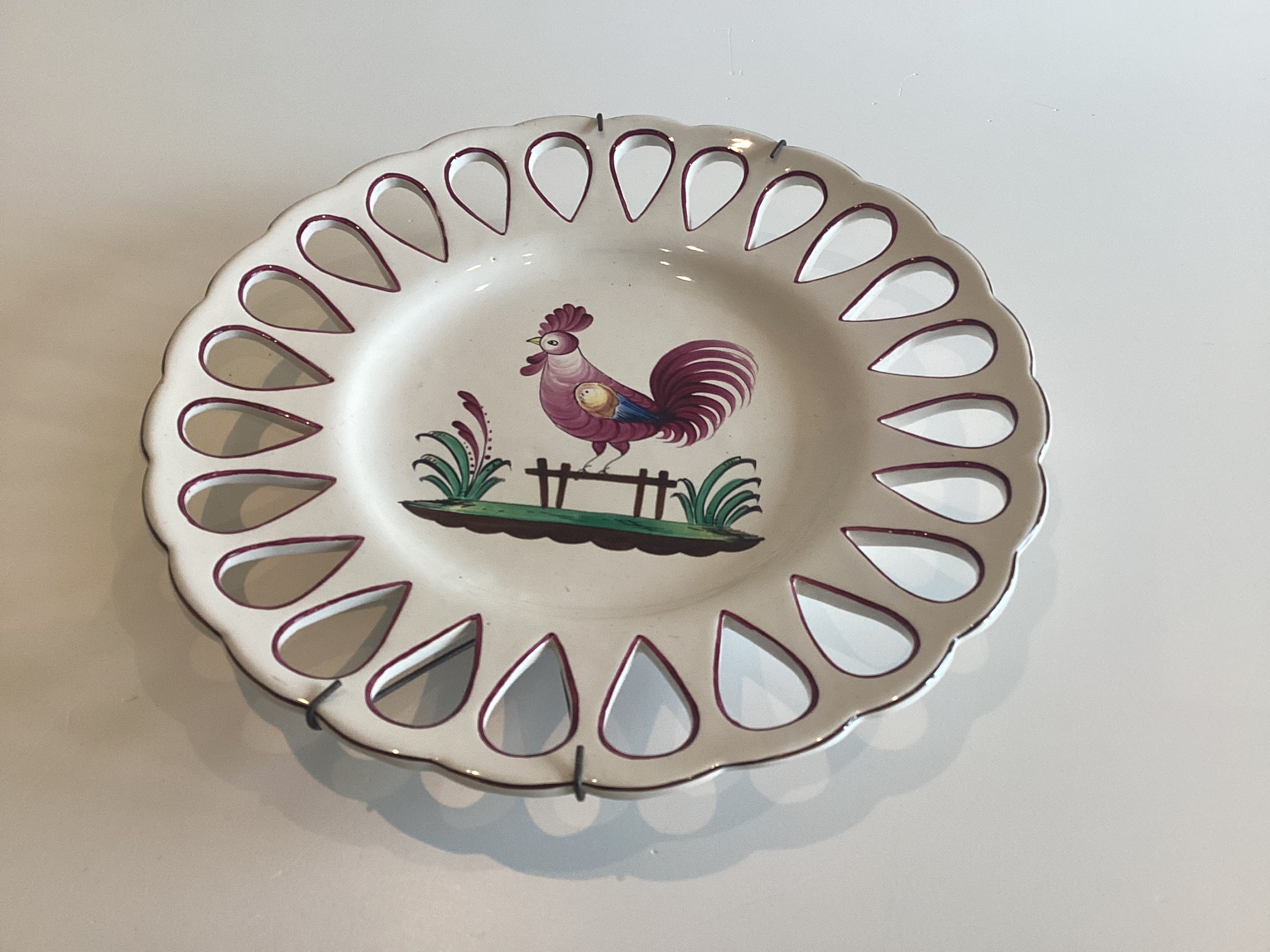
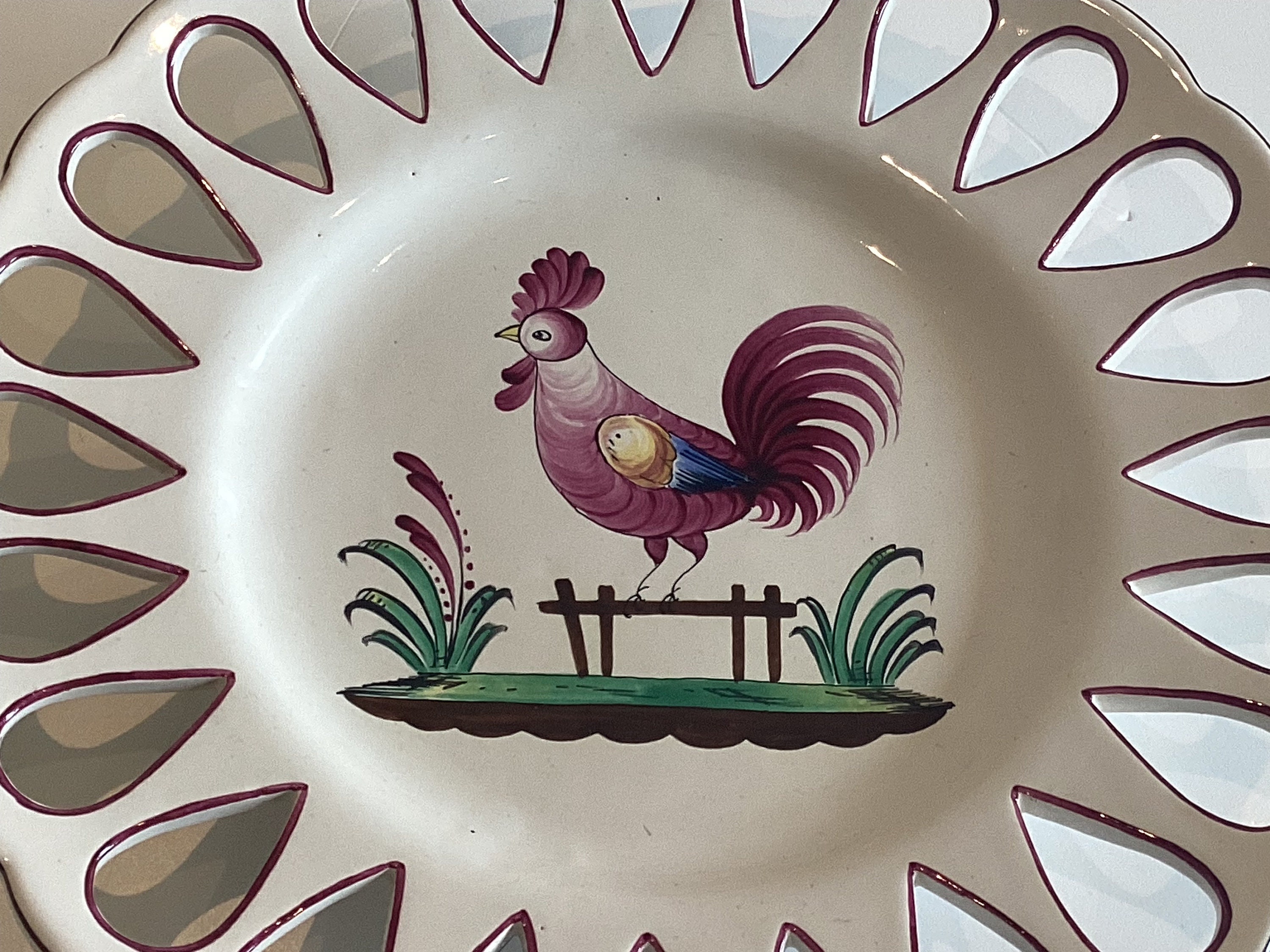
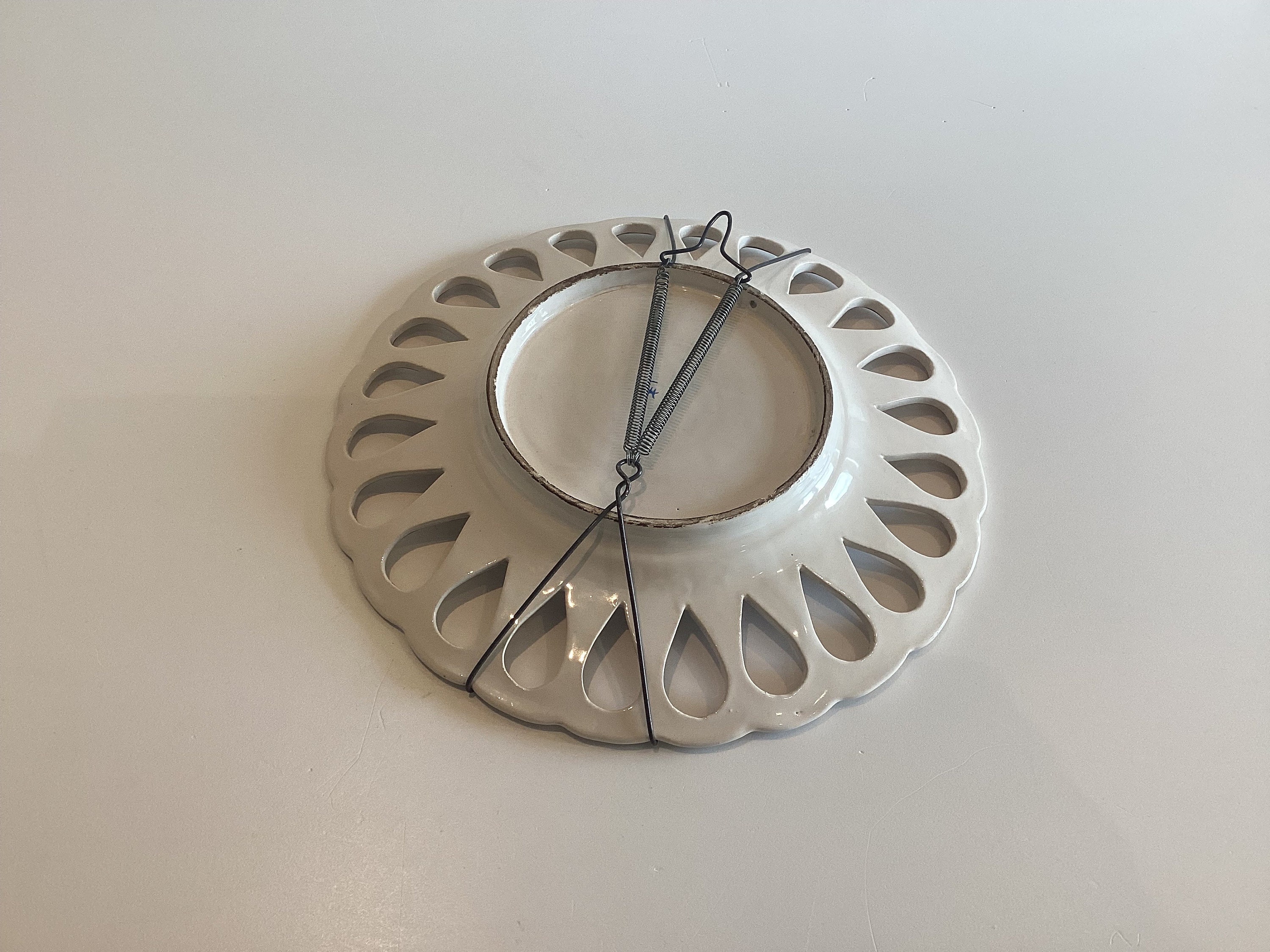
An extraordinary 18th-century French majolica (faïence) wall plate featuring rare, technically challenging reticulated craftsmanship and exquisite hand-painted decoration, originating from the golden age of the Moustiers manufacture (circa 1750-
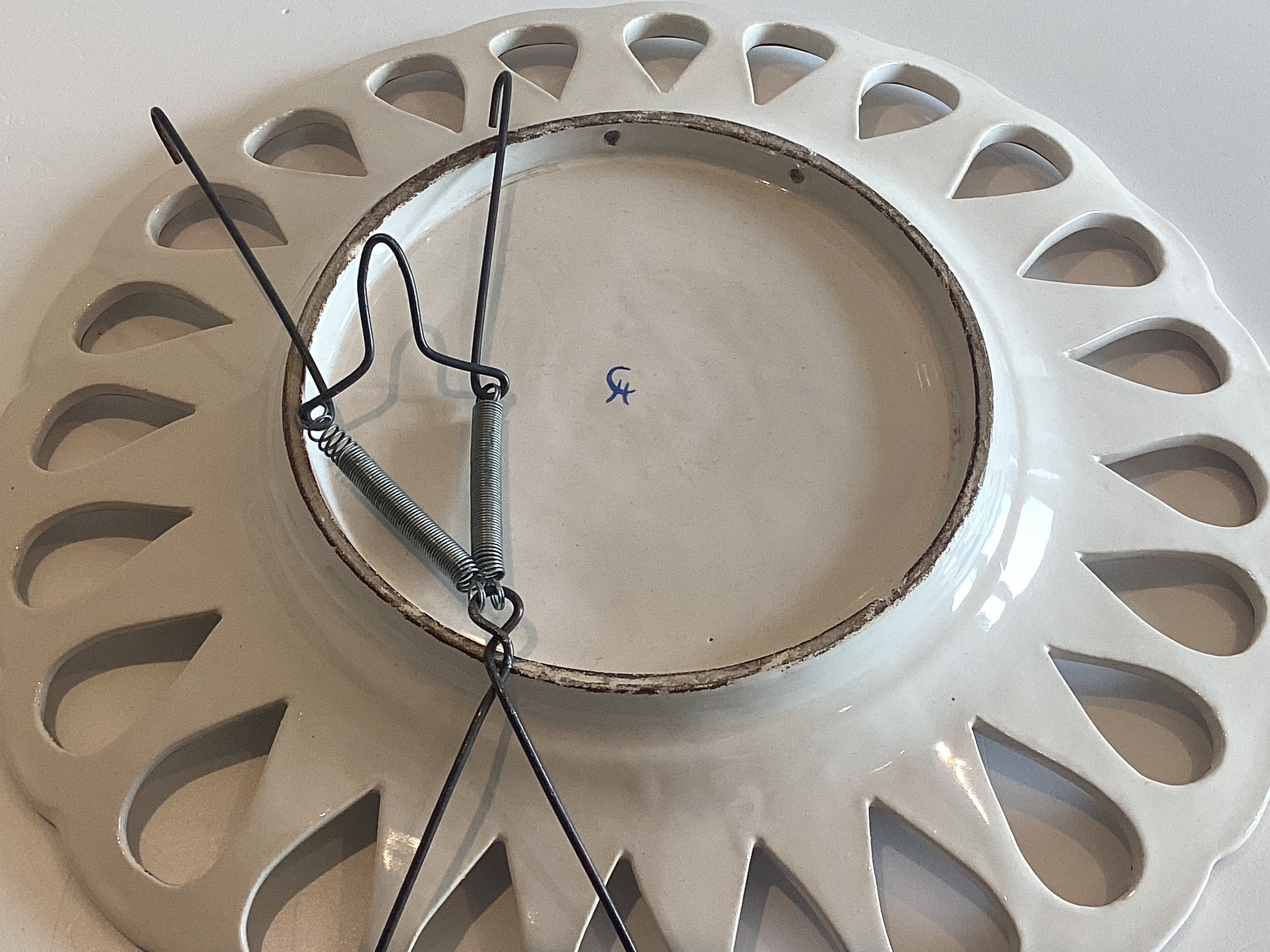
1780). This exceptional piece demonstrates a highly complex ceramic process where the delicate hand-cut teardrop perforations were maintained perfectly intact through the high-temperature firing process. Marked on the base with its original painter's monogram and complete with native factory-pierced hanging holes, this collectible represents the absolute pinnacle of 1700s French ceramic artistry in flawless condition.
DETAILS
Type: Perforated reticulated majolica wall plate.
Era: 18th Century (Circa 1750-1780).
Origin: Moustiers (Provence, France).
Material: Heavy tin-glazed majolica ceramic.
Design: Traditional Grand Feu proud rooster on a wooden fence.
Technique: Hand-painted with meticulous openwork perforated border.
Features: Factory-pierced suspension holes, authentic hand-painted marked base.
Diameter: 27.5 cm (10.83 inches).
Condition: Perfect, entirely untouched and unrestored.
RARE CERAMIC TECHNIQUE
The perforated majolica technique represents one of the most challenging ceramic arts, requiring exceptional skill to maintain the delicate pierced sections during high-temperature firing before collapsing. This plate showcases French ceramic mastery at its finest.
MUSEUM-QUALITY ANTIQUE
18th-century French Moustiers faïence of this quality and technical complexity is increasingly rare on the market. The combination of early Grand Feu perforated work, hand-painted decoration, and flawless condition makes this a significant investment acquisition for serious collectors of early European ceramics.
SHIPPING
Express shipping with professional packaging.]
Sold by MireilleBoutique