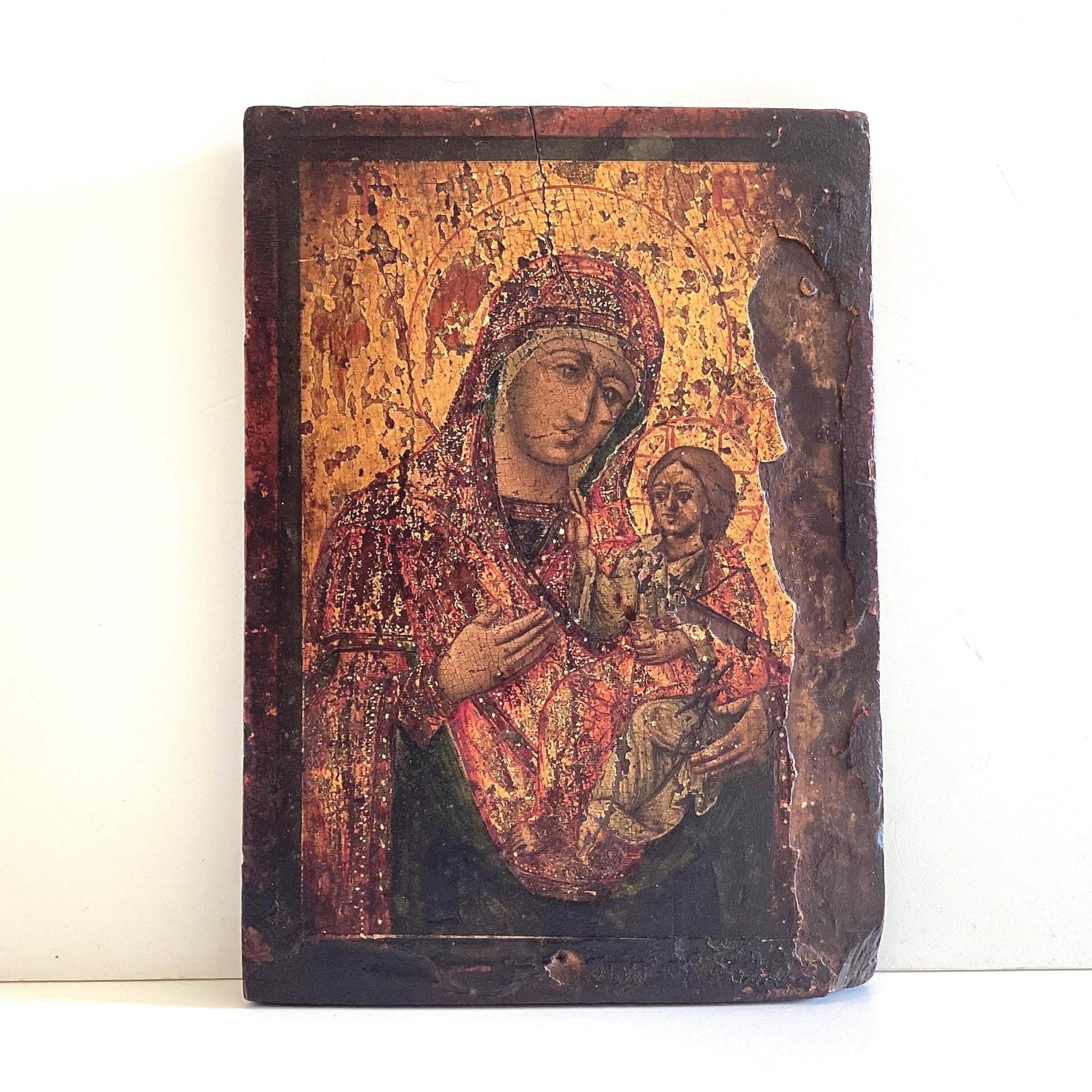
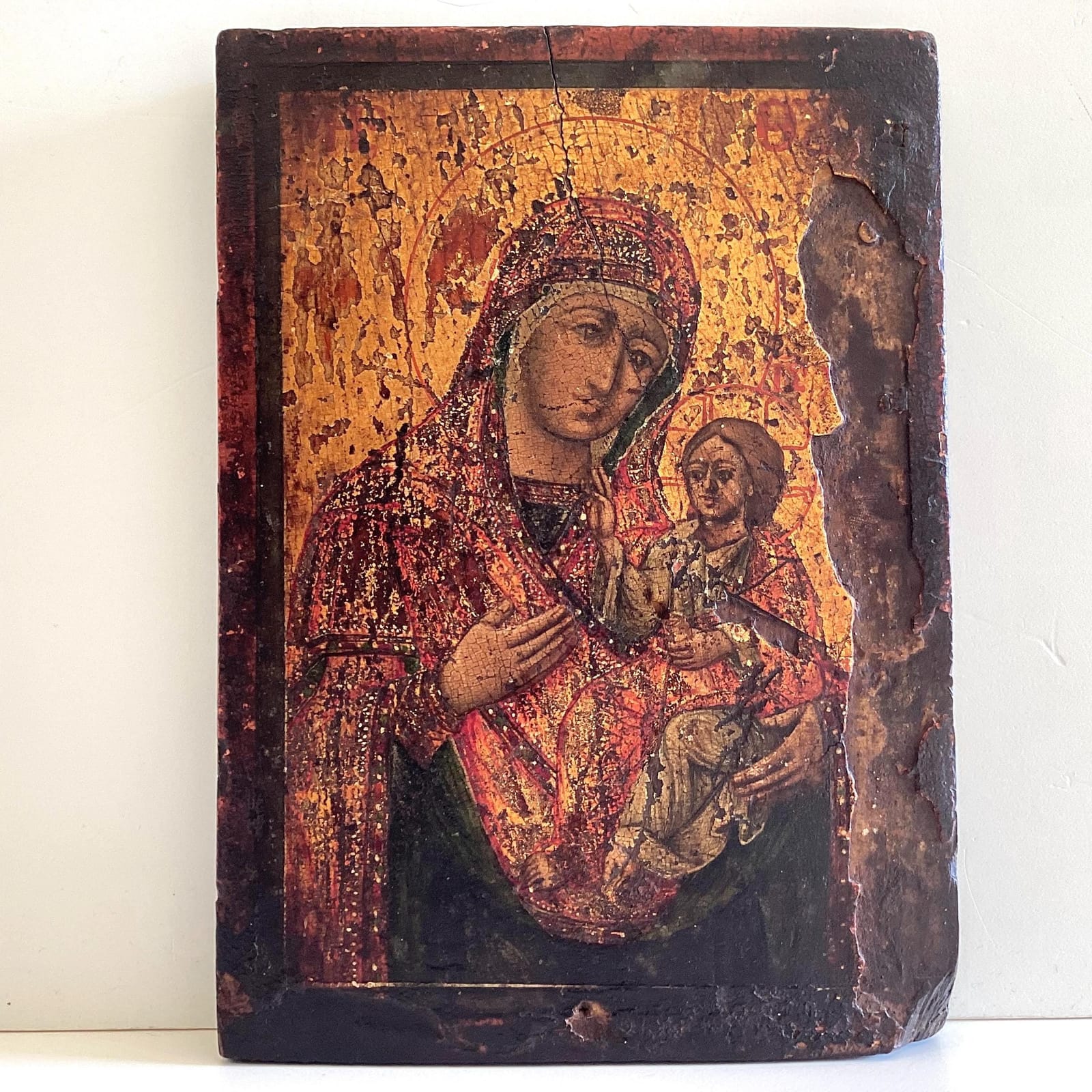
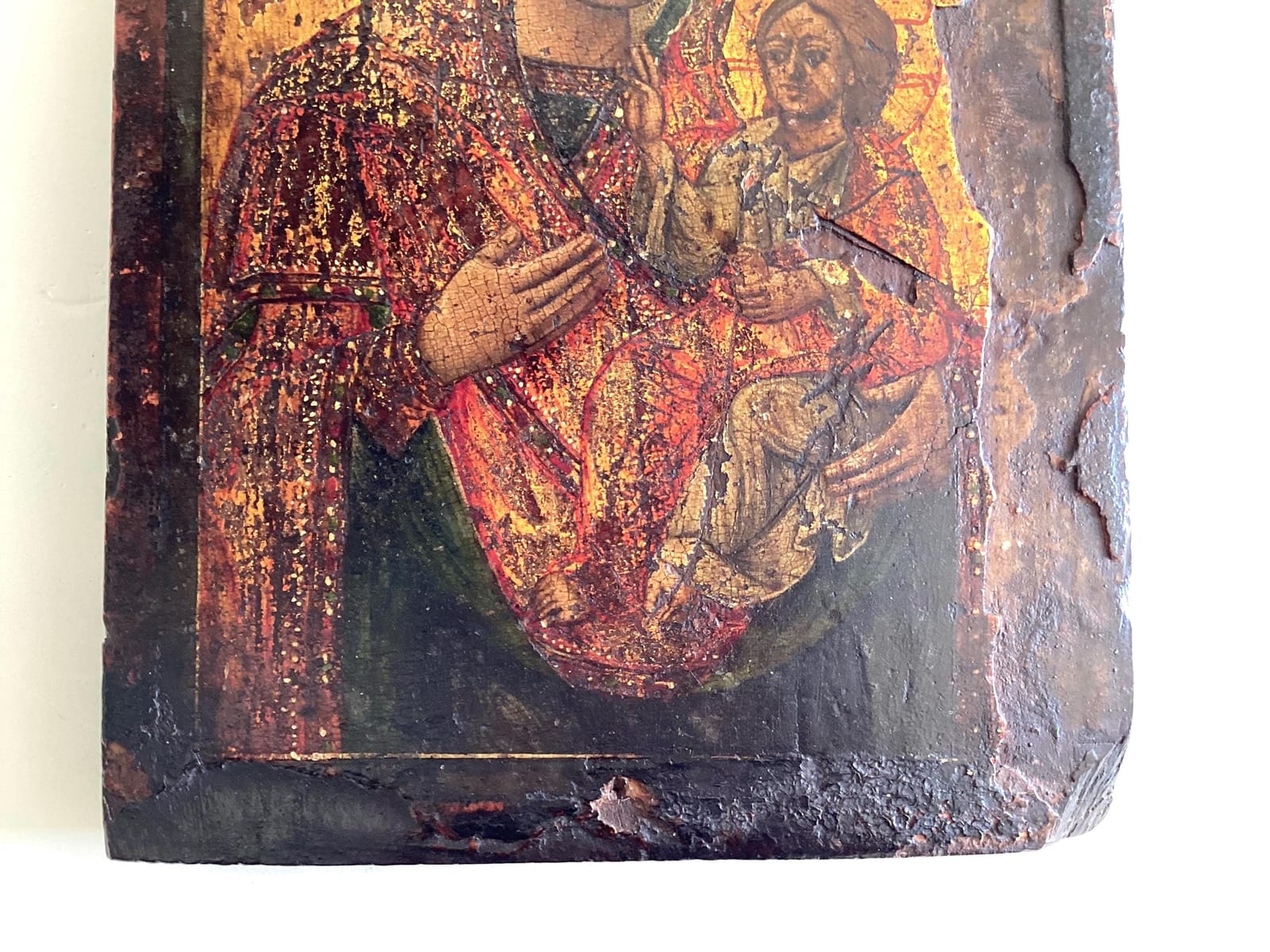
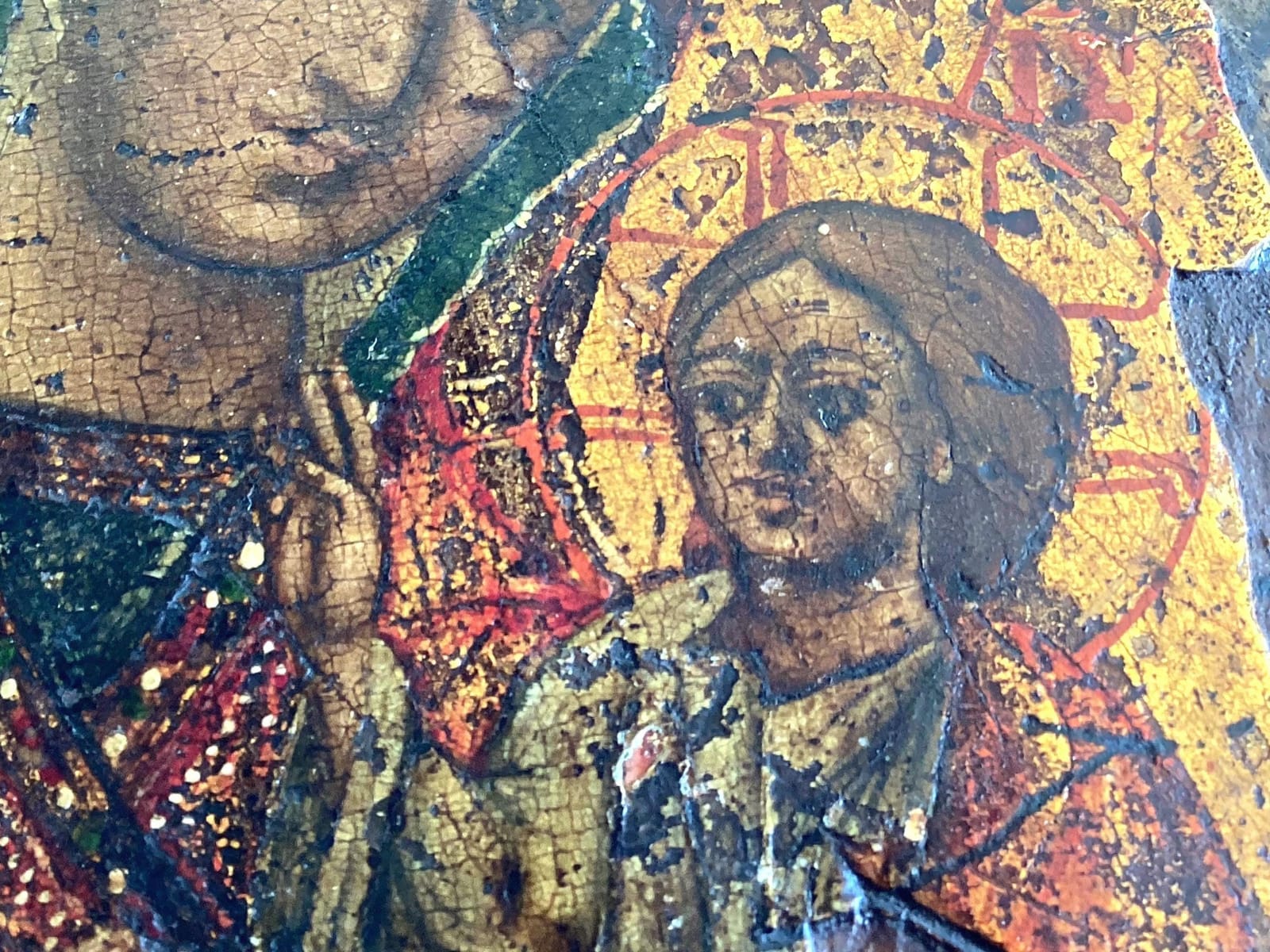
A Rare Monolithic Icon of the Mother of God Odigitria — c. 1600 An extraordinary work of Orthodox sacred art, this travel icon depicts the Theotokos Odigitria ("She who points the Way") in a prototypical variant. The Virgin holds the Christ Child on her left arm; He sits with legs bent and right hand raised in the traditional Orthodox blessing gesture.
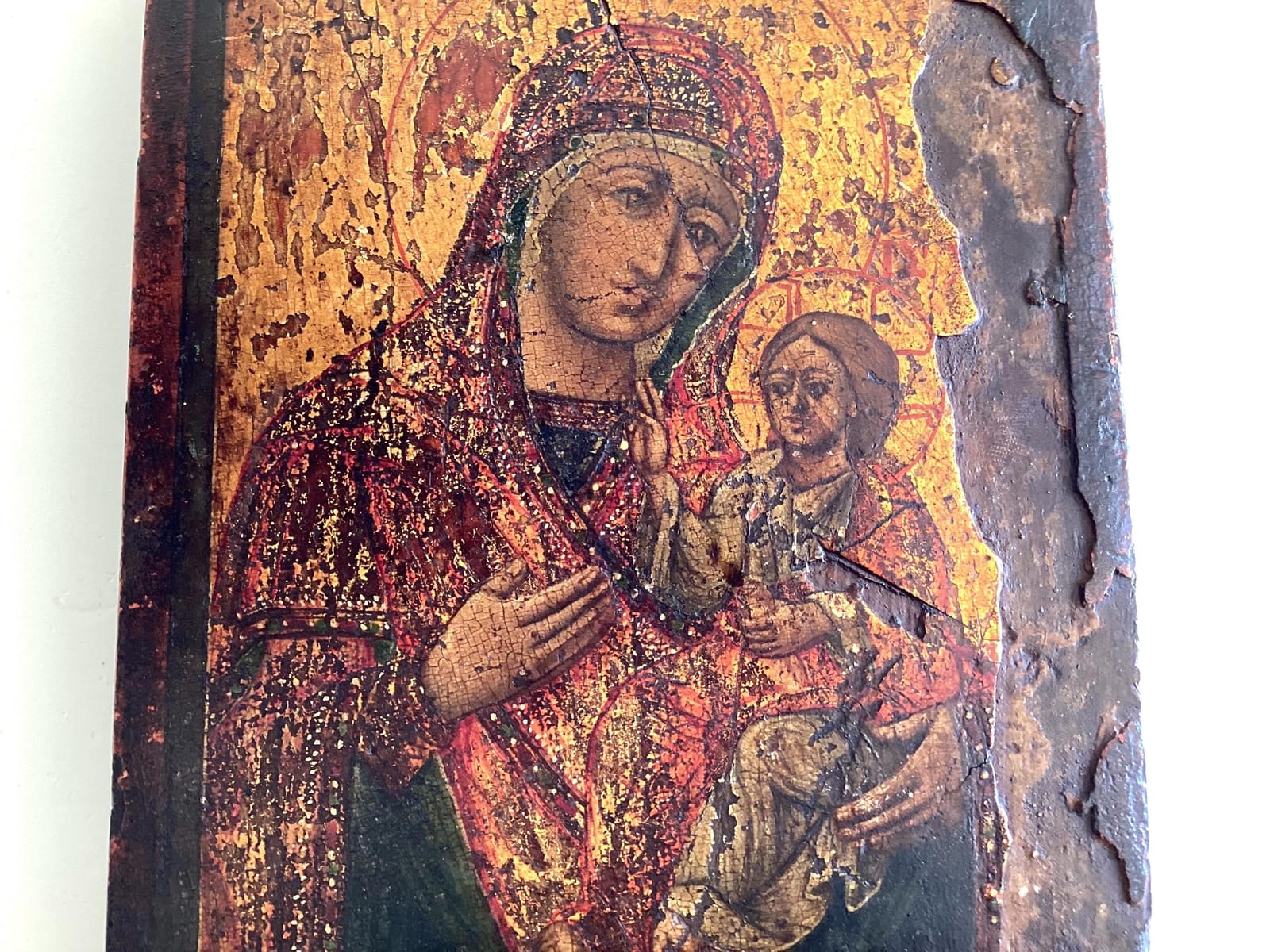
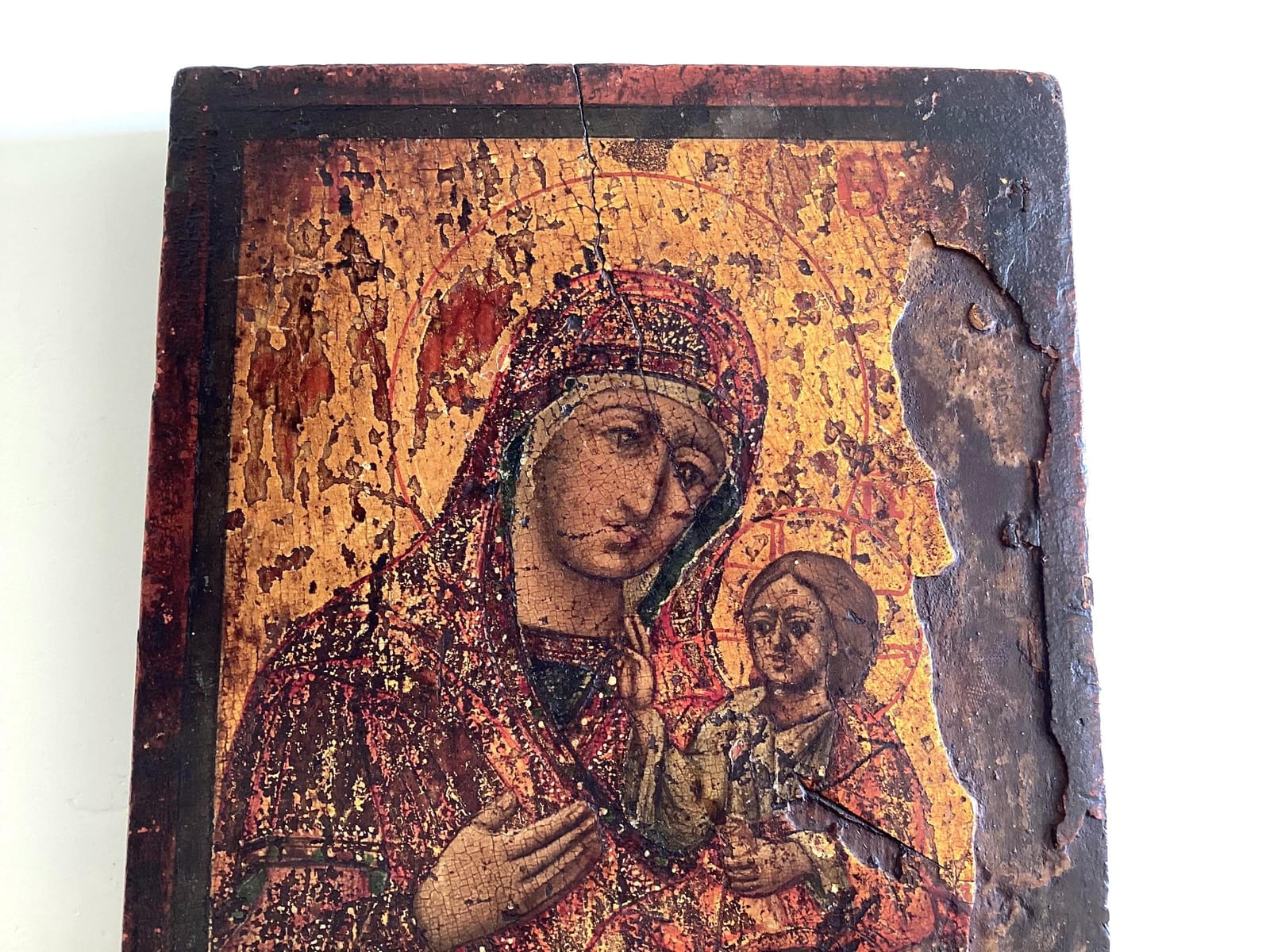
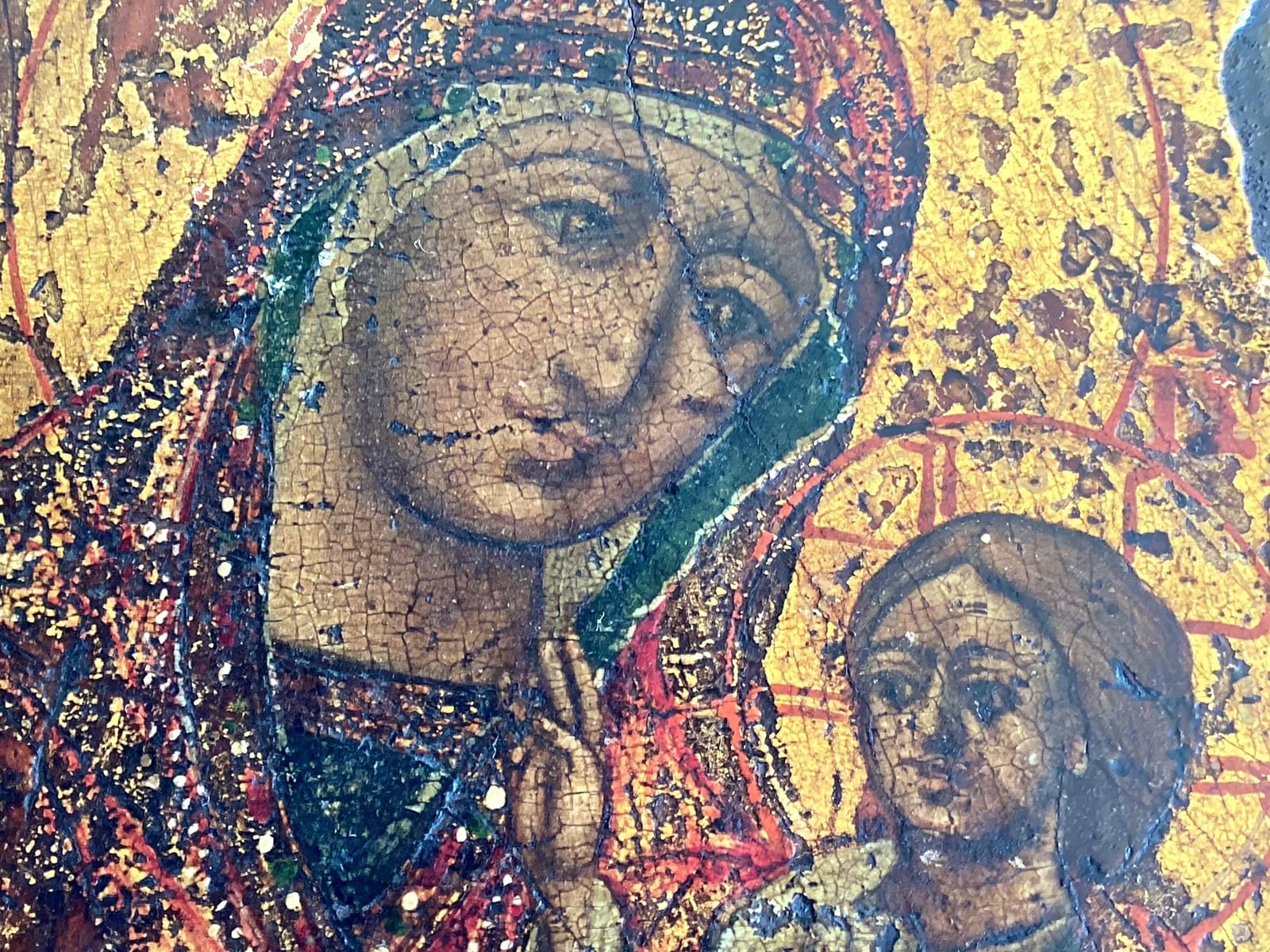
The facial features reveal an authentically Byzantine DNA, far from the academic naturalism of later periods. The Virgin's gaze and the Child's wide, fixed, hieratic eyes inherit the theological force of late Byzantine and post-Byzantine painting of the late 16th century. The features and nasal septum are defined by the primacy of graphic line over nuance, with highlights built outward according to mystical, pre-reform geometries.
CONSTRUCTION & MATERIALS
This icon is a genuine material document of the transition between the 16th and 17th centuries, characterized by uncompromising and exceptionally rare execution choices:
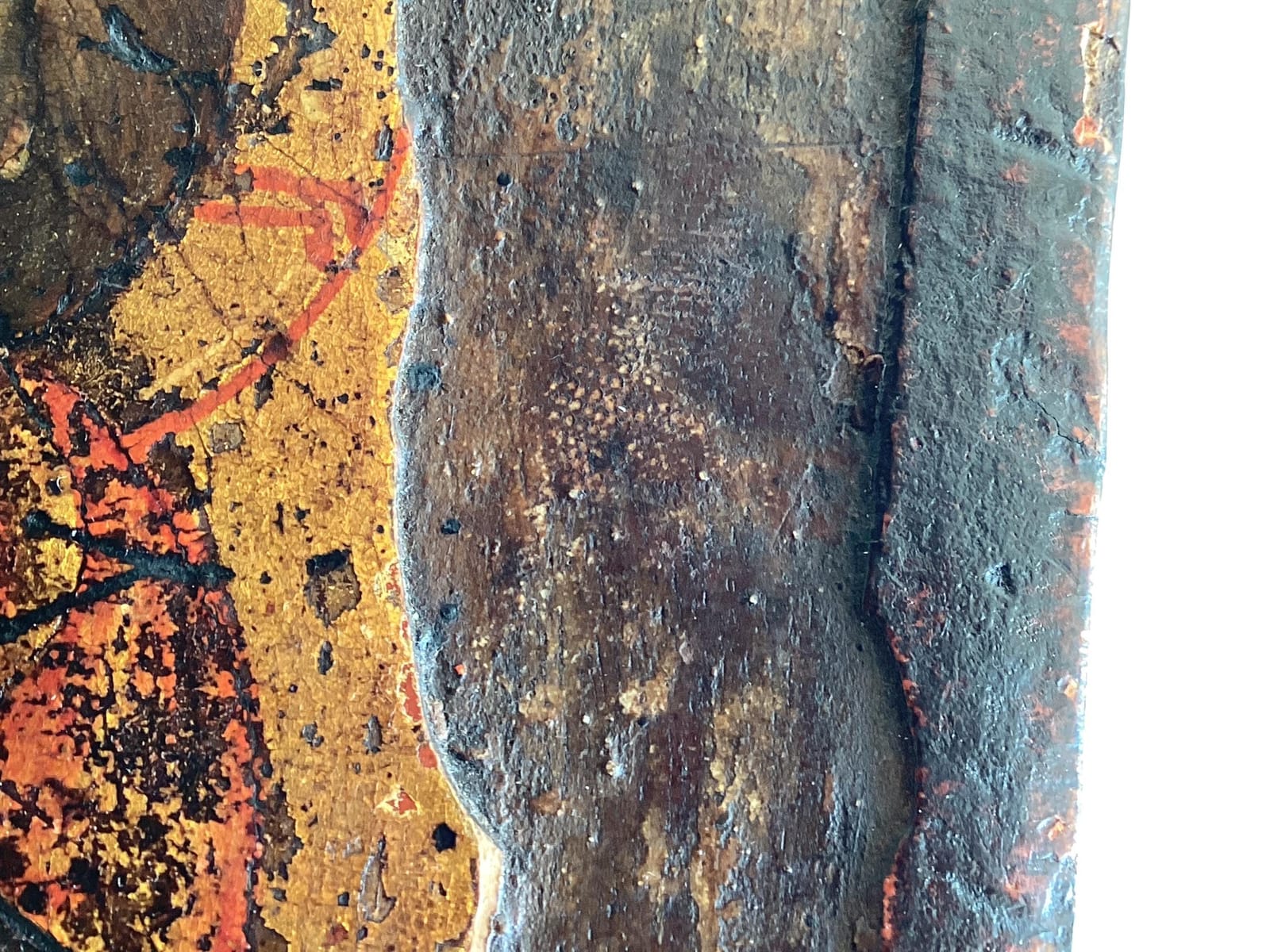
· The Panel (Monolithic Wood, Flat): Compact dimensions (21.9 × 15.7 cm) yet with an imposing, non-standard thickness of 2.3 cm and a weight of approximately 600 grams. The panel is a solid block of dense hardwood, entirely hand-worked, with a flat, uncarved surface — a construction choice that differs from the recessed-cradle panels more commonly found in later production. The complete absence of rear crossbars (shponki) testifies to an archaic construction criterion, in which the massive thickness of the wood alone compensated for the tension of the materials over the centuries
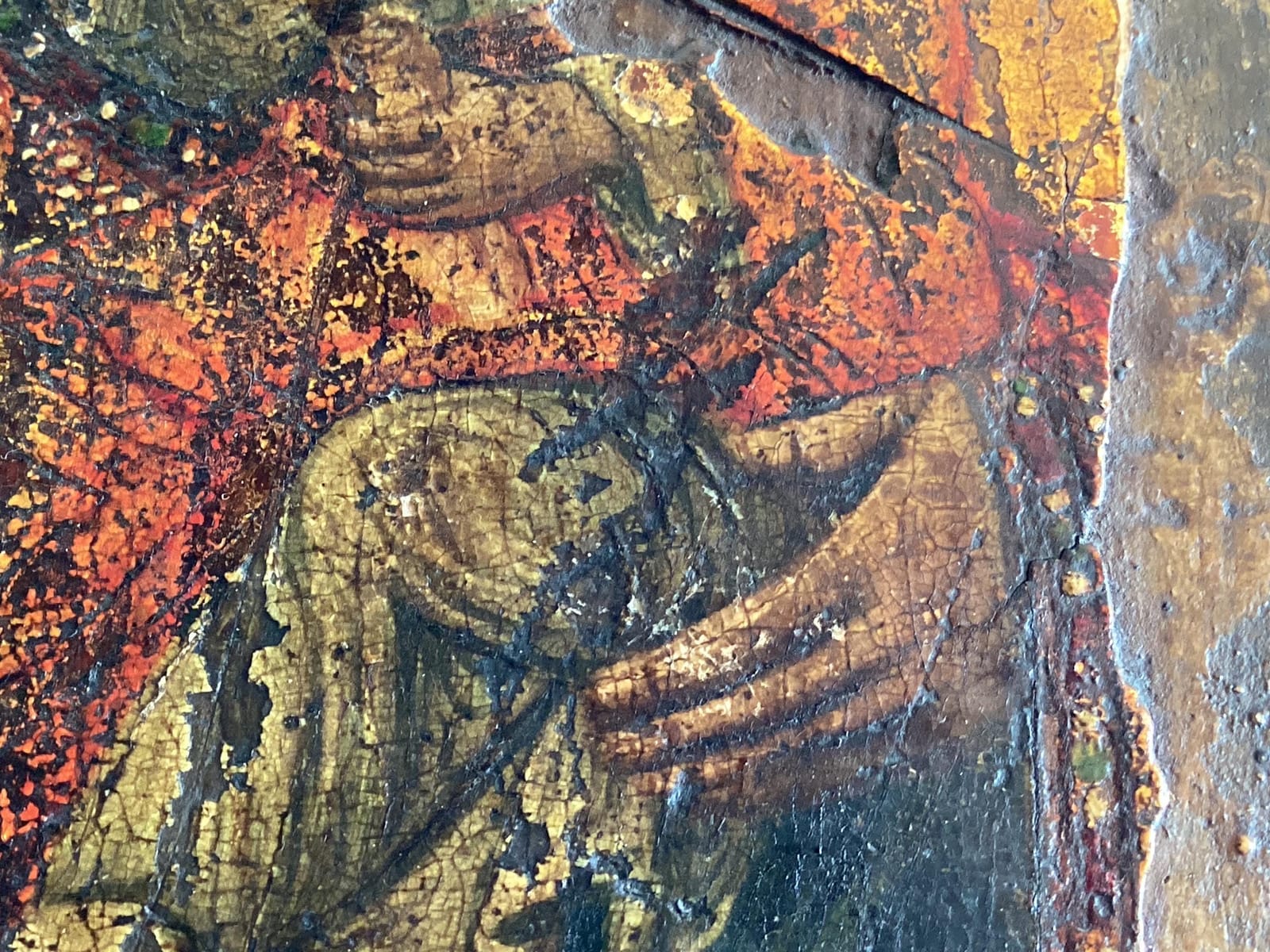
· The Preparation (Double-Thickness Gesso): On the front, the original linen (povoloka) is visible, embedded in a hot bath of pure fish glue that overflows the weave. Above it, a single, compact, whitish block of gesso and glue was applied "wet-on-wet," with double the standard thickness. This almost vitreous density protected the pigment, resulting in a deep and genuine craquelure
· Fine Incising (Kovka): The preparatory drawing does not show the sharp, standardized grooves typical of later periods. The incising on the ground is extremely fine, almost invisible, executed with a light stylus that follows the contours and halos millimeter by millimeter before the application of gold, later absorbed by the body of the paint
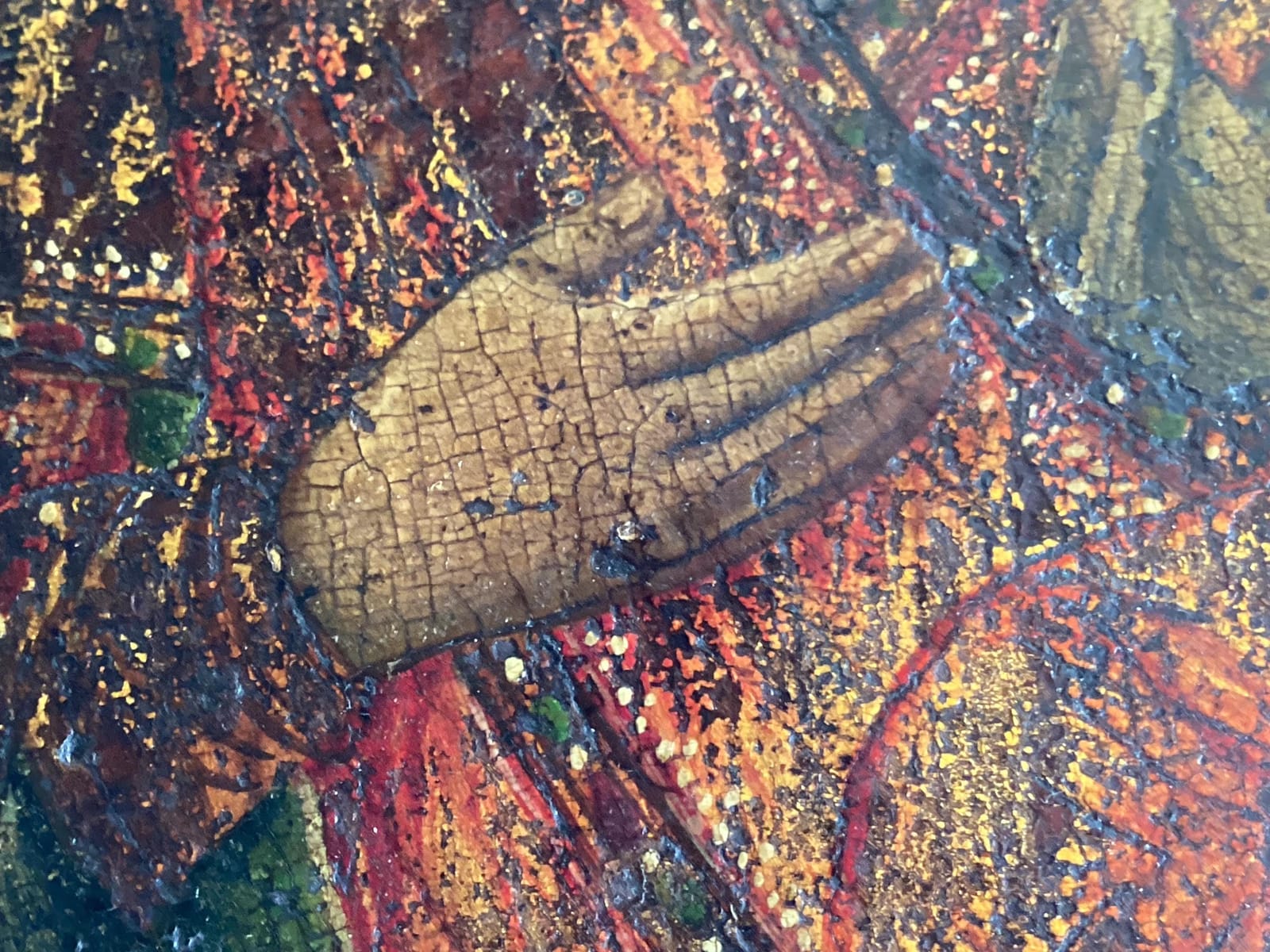
· Paint Surface: Egg tempera rich in mineral pigments. The surface is not flat but presents a fascinating, slight material relief visible in raking light, especially in the geometric flow of garments and highlights. The period gold leaf background allows the underlying red bole to emerge due to devotional wear and the passage of time
CONDITION
Genuine, intact, collector's condition. No modern restoration, overpainting, or alterations. On the right edge, there is a spectacular historical lacuna in the ground that serves as an "archaeological cross-section" — revealing the perfect original stratigraphy of the object (wood, overflowing glue, and linen weave). This is a definitive seal of authenticity. A natural, stabilized vertical crack affects the upper part of the panel, enhancing its mystical charm.
DETAILS
· Subject: Mother of God Odigitria (Theotokos)
· Period: Circa 1600 (late 16th – early 17th century)
· Origin: Byzantine Orthodox tradition
· Technique: Egg tempera and gold leaf on a monolithic wooden panel (flat, uncarved)
· Panel Dimensions: 21.9 × 15.7 cm (8.6 × 6.2 inches)
· Thickness: 2.3 cm (0.9 inches)
· Weight: Approx. 600 grams (1.3 lbs)
· Condition: Genuine, unrestored; historical lacuna on right edge, stable vertical crack
PERFECT FOR
· Collectors of rare pre-18th-century icons and Byzantine sacred art
· Those seeking a fully documented, unrestored piece with genuine material integrity
· A profound spiritual and historical addition to any collection of Orthodox art
SHIPPING
Express shipping with protective packaging.
Sold by MireilleBoutique
English · Français · Italiano · Nederlands · Español